SEO for Small Businesses in India: A Practical Guide to Getting More Organic Traffic
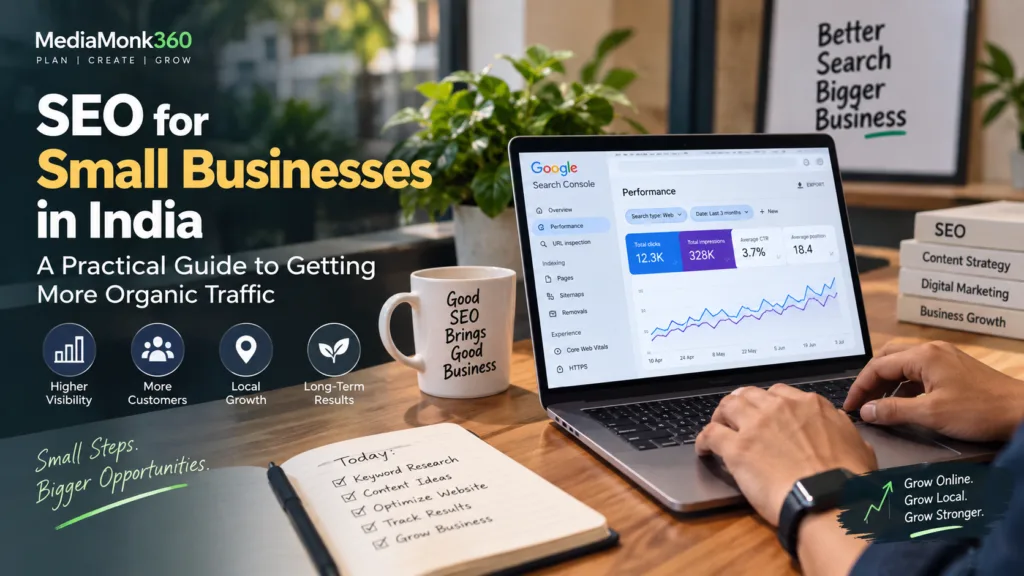
For a small business, getting found online can be difficult. You may have a good product, a reliable service and years of experience, but none of that helps if potential customers cannot find you when they search on Google.
This is where search engine optimization, or SEO, becomes useful.
SEO is not simply about adding keywords to a website and waiting for rankings. For a small business, it is about making your website easier to understand, creating genuinely useful information, building trust and helping the right people discover your business when they are looking for what you offer.
This is particularly important in India, where customers often compare several businesses online before making a decision. A local service provider, professional firm, retailer or startup can use SEO to build visibility without depending entirely on paid advertising.
In this guide, we will look at how SEO works for small businesses, what areas deserve attention first and how you can build a practical SEO strategy without wasting time on tactics that do not contribute to real business growth.
What Is SEO for Small Businesses?
SEO for small businesses is the process of improving a company’s website and online presence so that relevant people can discover it through search engines.
The important word here is “relevant.”
Getting thousands of visitors is not necessarily useful if those visitors have no interest in your products or services. A smaller number of people searching for exactly what your business provides can be much more valuable.
For example, a digital marketing agency in Nagpur does not necessarily need to rank for a broad term such as “digital marketing.” It may be more useful to appear for searches related to digital marketing services in Nagpur, SEO services for local businesses or Google Ads management.
The objective is therefore not just traffic.
The objective is visibility that can lead to enquiries, calls, visits, bookings or sales.
Why SEO Matters for Small Businesses in India
Small businesses often compete with larger companies that have bigger advertising budgets and established brands. SEO gives smaller businesses another way to compete: relevance and useful information.
A well-optimized website can continue attracting organic visitors after the initial content and technical work have been completed. This does not mean SEO produces instant results or guarantees a particular ranking. Search visibility depends on many factors, including competition, location, website quality and the search itself.
Still, a consistent SEO strategy can create a useful long-term acquisition channel.
Customers Are Already Searching
People search Google when they need an answer, product or service.
Someone looking for a dentist, interior designer, accounting firm, property consultant, restaurant or marketing agency may search before contacting a business.
If your website provides a clear answer to that need, it has an opportunity to enter the customer’s consideration set.
Organic Visibility Can Support Long-Term Growth
Paid advertising can provide immediate visibility while a campaign is active. SEO works differently.
Good content and a technically sound website can continue attracting search traffic over time, although rankings and traffic can change as search results, competitors and user behaviour change.
For a small business, this makes SEO worth considering as part of a broader digital marketing strategy rather than treating it as a one-time project.
Start With the Searches Your Customers Actually Make
One of the biggest mistakes small businesses make is choosing keywords based only on what they think sounds important.
Instead, start with the customer.
Think about the questions they ask before buying. Think about the services they need, the problems they are trying to solve and the locations they care about.
For example, a business selling accounting services might need to understand searches such as:
- GST accounting services for small businesses
- CA for startups
- business tax consultant
- accounting services in Nagpur
- how to file GST returns
- bookkeeping services for small businesses
These searches represent different stages of the buying journey.
Some people are looking for information. Others are already comparing providers.
A useful SEO strategy should address both.
Build a Website That Clearly Explains What You Do
Before worrying about hundreds of keywords, make sure your website is easy to understand.
A visitor should be able to answer basic questions quickly:
- What does the business offer?
- Who is the service for?
- Where does the business operate?
- Why should someone consider this business?
- How can they contact or buy from the business?
Your main service pages should provide enough information for users to understand the service instead of relying on vague marketing statements.
Create Dedicated Pages for Important Services
If your business offers several different services, avoid putting everything on one generic page.
For example, a digital agency might have separate pages for:
- SEO
- Google Ads
- Meta Ads
- Social Media Management
- Web Development
- Content Writing
Each page can explain the specific service, process, use cases, frequently asked questions and next steps.
This gives users a clearer experience and gives search engines more context about the business.
Local SEO Is Especially Important for Small Businesses
If your business serves a particular city or geographical area, local SEO deserves serious attention.
A local customer may not search for a national provider. They may search for a business near them.
For example:
“SEO agency in Nagpur”
“dentist near me”
“interior designer in Pune”
“best cafe in Nagpur”
Google says local search results are primarily influenced by relevance, distance and prominence. Keeping your Business Profile information complete and accurate helps Google understand how your business matches relevant local searches. :contentReference[oaicite:1]{index=1}
Keep Your Google Business Profile Accurate
Make sure your business information is consistent and up to date.
Pay attention to:
- Business name
- Address
- Phone number
- Website
- Business category
- Opening hours
- Services
- Photos
- Business description
Do not treat the Business Profile as something you create once and forget.
Keep important information updated and respond appropriately to customer reviews.
Create Useful Local Content
Local content should not simply repeat the same city name throughout an article.
Instead, create information that is genuinely useful to people in that location.
For example, a property company could publish a guide to buying property in a particular city, while a local marketing agency could explain how businesses in that market can generate leads online.
The location should be relevant to the subject, not inserted just to manipulate rankings.
Create Content That Answers Real Customer Questions
Blogging can support SEO, but publishing articles simply to increase the number of pages on your website is not a strong strategy.
Every article should have a reason to exist.
Before publishing, ask:
What question does this article answer?
Who is it written for?
What can the reader do with the information?
Is there something genuinely useful here that a visitor would want to save or share?
For example, instead of publishing a generic article called “What Is Digital Marketing?”, a marketing agency could create a practical guide explaining how a small business can decide between SEO, Google Ads and social media marketing.
The second topic has a clearer business context and gives the reader a decision-making framework.
Improve On-Page SEO Without Keyword Stuffing
On-page SEO helps search engines understand the subject of a page.
Important elements include:
- Page title
- H1 heading
- H2 and H3 headings
- Introduction
- Body content
- Image alt text
- Internal links
- URL structure
- Meta description
The primary keyword can appear naturally where appropriate, but there is no need to repeat it in every paragraph.
For example, if the main topic is “SEO for small businesses,” related phrases such as “organic search traffic,” “local SEO,” “Google Business Profile,” “search visibility” and “SEO strategy” can appear naturally when they help explain the subject.
The reader should never feel that an article was written around a keyword rather than around their question.
Internal Linking Can Connect Your Content
Internal links help users move between related pages on your website.
Suppose you publish an article about SEO for small businesses.
You could naturally link to related content about:
- Local SEO
- Keyword research
- Technical SEO
- Content marketing
- Google Business Profile
This creates a connected information structure.
It can also help search engines discover related pages and understand how different pieces of content fit together.
The key is relevance.
Do not add links simply because you want more internal links. Add them when the linked page gives the reader useful additional information.
Technical SEO Still Matters
Good content cannot compensate for every technical problem.
A small business website should provide a smooth experience across desktop and mobile devices.
Some important technical areas include:
Mobile Experience
A large number of users access websites from smartphones.
Your website should be easy to read and navigate on smaller screens. Buttons should be usable, text should remain readable and important information should not be hidden behind unnecessary design elements.
Website Speed
Slow pages can create a poor user experience.
Compress large images, use modern image formats where appropriate, reduce unnecessary scripts and review your hosting and caching setup.
Crawlability and Indexing
Search engines need to be able to access important pages.
Check that important pages are not accidentally blocked from crawling or marked in a way that prevents them from appearing in search results.
Your XML sitemap should also reflect the pages you actually want search engines to discover.
Build Trust Around Your Business
SEO is not only a technical exercise.
People need reasons to trust the business behind the website.
Depending on your industry, useful trust elements may include:
- Clear business information
- Contact details
- Service information
- Team information
- Customer reviews
- Case studies
- Original photographs
- Business credentials
- Relevant certifications
- Clear policies
Do not add trust signals simply for decoration. They should help a potential customer understand who they are dealing with.
This is particularly important for businesses asking visitors to submit personal information, make payments or contact them about a significant purchase.
Measure SEO by Business Outcomes, Not Just Rankings
Rankings are useful, but they should not be the only metric you watch.
A small business should also look at:
- Organic clicks
- Search impressions
- Relevant search queries
- Website enquiries
- Phone calls
- Form submissions
- Leads
- Sales
- Engagement with important pages
Google Search Console can help you understand how your website appears in Google Search, while analytics tools can help connect website activity with business goals.
For example, moving from position 40 to position 15 may look positive, but the bigger question is whether the page is attracting the right visitors and contributing to enquiries.
That is where SEO becomes a business activity rather than just a ranking exercise.
A Simple SEO Plan for a Small Business
If you are starting from scratch, do not try to fix everything at once.
A practical starting plan could look like this:
Step 1: Understand Your Customers
Write down the products and services you offer and the problems your customers are trying to solve.
Step 2: Research Relevant Searches
Find the phrases people actually use when looking for your products, services and information.
Step 3: Fix the Important Website Pages
Make sure your homepage, service pages, location pages and contact page clearly explain what your business does.
Step 4: Create Useful Supporting Content
Publish genuinely helpful articles around questions your potential customers are asking.
Step 5: Strengthen Local Presence
If you serve a particular location, keep your Google Business Profile complete and your business information accurate.
Step 6: Build Internal Links
Connect related service pages and articles so users can easily explore more information.
Step 7: Monitor and Improve
Use search and analytics data to identify pages that are gaining visibility, pages that need improvement and topics worth covering next.
Common SEO Mistakes Small Businesses Should Avoid
SEO becomes much more difficult when the strategy is built around shortcuts.
Some common mistakes include:
Publishing Large Amounts of Generic Content
More pages do not automatically mean more organic traffic.
If several articles say almost the same thing with slightly different keywords, they may provide little additional value to readers.
Copying Content From Other Websites
Changing a few words in another article does not turn it into genuinely useful original content.
Your content should add your own explanation, examples, experience or analysis.
Focusing Only on Rankings
A ranking without relevant traffic or business value is not enough.
Always connect SEO work to a real business objective.
Ignoring Local Search
A business serving one city may not need to compete for broad national keywords.
Location-specific searches can be much closer to the actual buying decision.
Expecting Instant Results
SEO is not a guaranteed overnight growth channel.
Competition, website history, content quality, technical issues and search behaviour all influence how quickly a website gains visibility.
How Small Businesses Can Think About SEO in 2026
Search is becoming more diverse.
People still use traditional search results, but they are also encountering AI-generated answers and other answer-oriented search experiences.
That makes the quality of your underlying information increasingly important.
Instead of writing only for a search engine, build pages that clearly explain your business, answer genuine questions, demonstrate knowledge and connect related topics.
Strong fundamentals such as useful content, clear page structure, relevant internal links, good technical performance and trustworthy business information remain a sensible foundation.
For businesses targeting local customers, maintaining accurate business information and building genuine prominence also matters. Google identifies relevance, distance and prominence as the main factors behind local ranking. :contentReference[oaicite:2]{index=2}
Final Thoughts
SEO can be a valuable growth channel for small businesses in India, but it works best when treated as a long-term business investment rather than a collection of ranking tricks.
Start with the people you want to reach.
Understand what they search for.
Build pages that answer their questions clearly.
Make your website technically sound.
Strengthen your local presence where relevant.
Then measure whether your search visibility is bringing the right people to your business.
You do not need hundreds of pages to start.
You need a useful website, a clear strategy and content that gives visitors a reason to stay, learn and take the next step.
That is the foundation of sustainable SEO for a small business.
Questions, Clearly Answered.
Get straightforward answers to common questions around SEO, advertising, social media, content and digital growth.
Results depend on the channel, competition, website condition, budget and business objectives. SEO generally needs consistent work over time, while paid campaigns can generate measurable data much faster.
SEO helps businesses build organic visibility, useful content assets and sustainable search presence. It also supports visibility across modern search experiences and AI-powered discovery.
SEO focuses on organic visibility, while Google Ads uses paid placements to reach selected searches and audiences. Businesses may use either channel or combine both depending on their goals and timelines.
Yes. Social media can support awareness, engagement, lead generation and remarketing when content, targeting, creative and conversion paths are aligned.
GEO refers to Generative Engine Optimization and AEO refers to Answer Engine Optimization. Both focus on making information easier for modern search and answer systems to understand and surface.
The decision depends on business objectives, competition, budget, sales cycle, audience and desired timeline. Paid campaigns can provide faster testing, while SEO builds organic visibility over time.
Explore More Insights
Practical insights on SEO, advertising, content, social media and digital business growth.
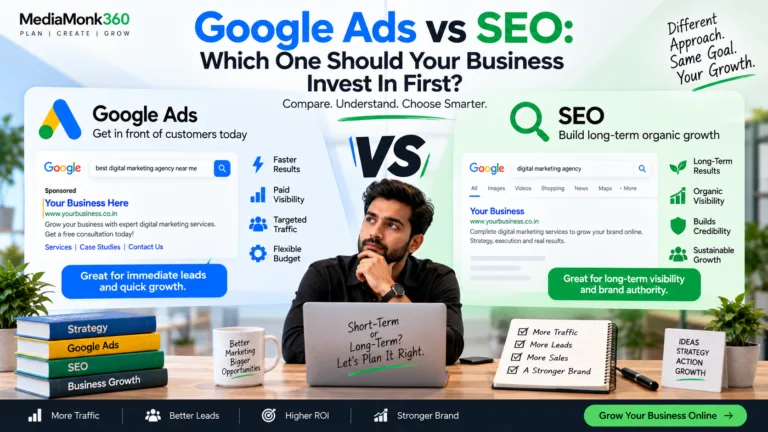
Google Ads vs SEO: Which One Should Your Business Invest In First?
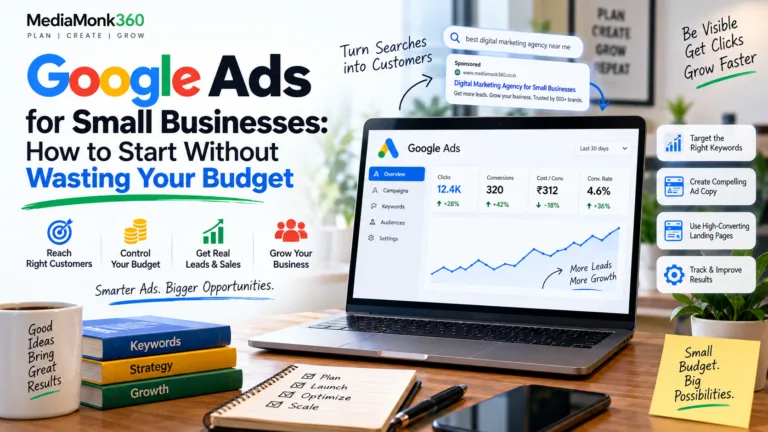
Google Ads for Small Businesses: How to Start Without Wasting Your Budget
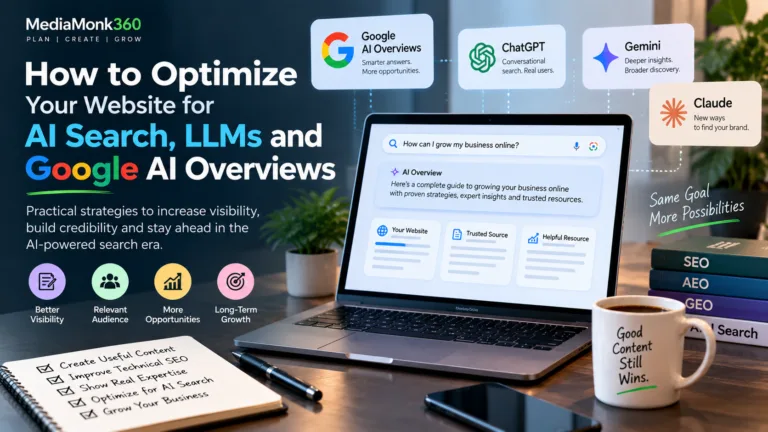
How to Optimize Your Website for AI Search, LLMs and Google AI Overviews
GEO vs AEO vs SEO: What Businesses Need to Know About AI Search
How to Build an SEO Strategy That Actually Brings Business Leads
Digital Services Built Around Growth
From websites and apps to search, paid media, content and creative — everything you need to build a stronger digital presence.
Web Development
Fast, responsive and conversion-focused websites.
App Development
Modern mobile apps designed around your users.
SEO / GEO / AEO
Search visibility across Google and AI discovery.
Google Ads / PPC
Targeted campaigns focused on qualified traffic.
Meta Ads
Creative campaigns built for reach and leads.
Social Media Management
Consistent social content that builds your brand.
Content Writing
Useful, search-friendly content that earns attention.
Graphic Design
Clean visual systems for stronger brand communication.
Ready to Turn Your Digital Presence Into Growth?
Let's create a focused digital strategy for your business and turn ideas into measurable results.
Talk to MediaMonk360